
Airbnb vs. African Hotels
There is a crater lake in southwestern Uganda called Lake Kanyinya. You wouldn't find it on a resort brochure. No lobby. No check-in desk. No concierge handing you a laminated activity menu. What you get instead is a compound — the whole thing, to yourself — perched above water so still it looks painted. A bonfire pit. A living room with an actual television. Kayaks sit at the bottom of a trail that winds down from the property to the shore. We brought our own ingredients from the market — cheaper, fresher, more honest than anything a hotel restaurant would have charged us for — and cooked in a full kitchen that actually worked. We swam. We kayaked. We watched movies. We lit the fire when the night came in cold off the lake.
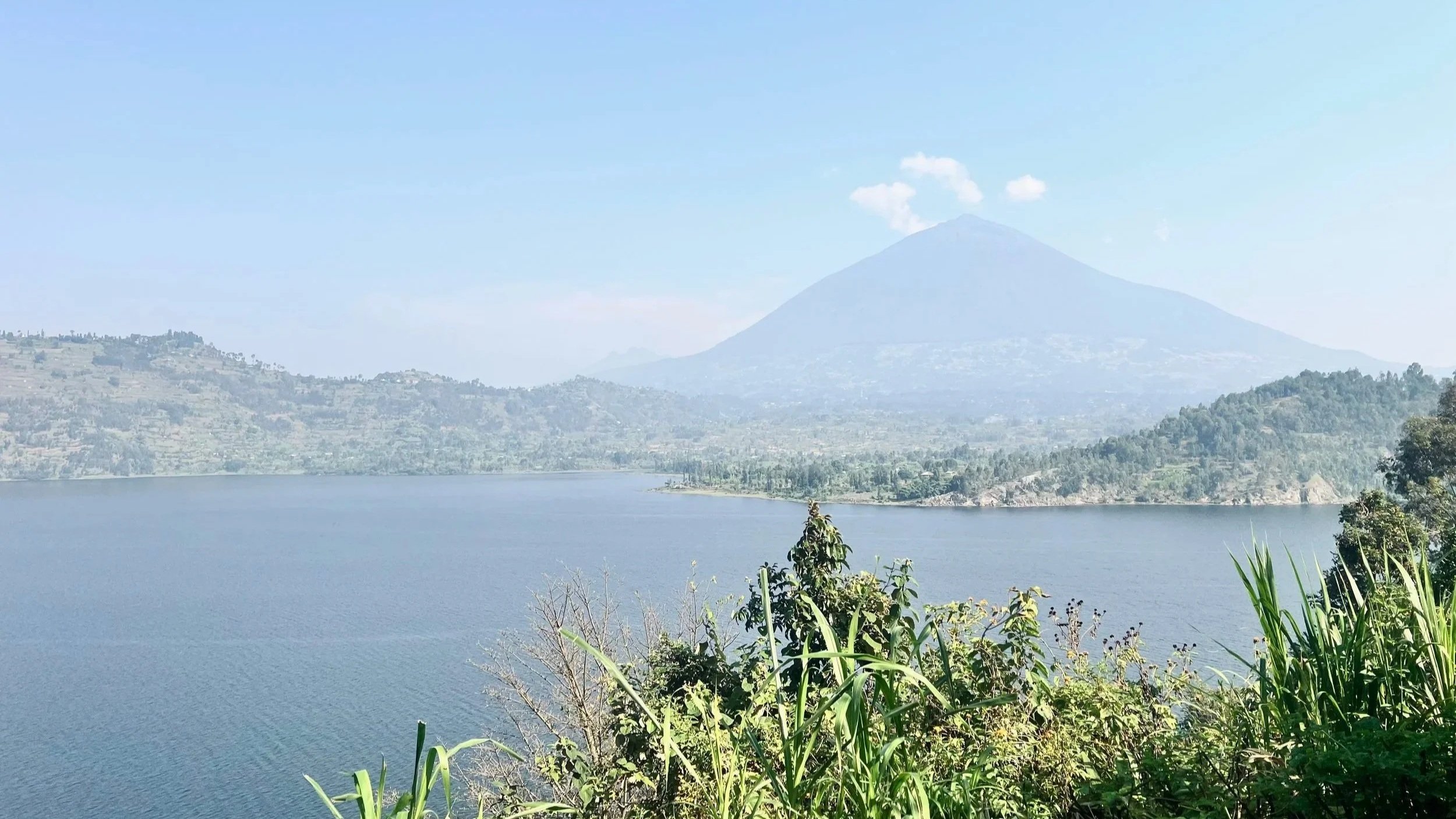
The total cost? Less than what a comparable night at a mid-range lodge or hotel in Kampala would have run us. And the memory? There is no version of a hotel room that produces that memory.
That trip was my clearest education in what the Airbnb model has done to the hospitality industry's value equation in Africa — and why so many hotel operators across this continent are losing business they don't fully understand they're losing.
The Numbers Don't Lie
Let's start with the data, because that’s where the conversation usually ends before it even begins.
Globally, the average Airbnb night runs $137. The average hotel night runs $167. That's a $30 gap on paper — modest, manageable, easy for a hotel brand to dismiss. But averages are deceptive instruments. They flatten the story. A luxury villa in Cape Town, sitting inside that Airbnb average, pulls the number up. A five-star Nairobi hotel sitting inside that hotel's average pulls it up too. Strip out the extremes and look at the mid-range — the segment where most African travellers and visiting professionals are actually booking — and that gap widens considerably.
Research across 300,000 listings found that hotels are technically cheaper in over 75% of direct single-listing comparisons. That sounds like a hotel industry win until you read the rest of the sentence: that calculation assumes solo or couple travel. The moment you add a third person, a family, a group of friends, splitting a weekend trip, the economics flip entirely. A private Airbnb compound on the edge of a Rwandan or Ugandan lake, split between four people, doesn't just beat the hotel — it isn't a close contest.
There is one more number worth sitting with. Airbnb recently restructured its fee model, shifting from a split-fee arrangement to a host-only model — meaning a property previously listed at $200 per night may now need to be listed at $231 to yield the same payout for the host. The gap between Airbnb and hotel pricing is closing from the platform side. Which means the only thing Airbnb has left to win on — and it is winning — is experience. Value. The feeling that you got something real for your money.
That is a fight hotels in Africa are not currently equipped to have.
What You're Actually Paying For
Here is the honest version of what a hotel is selling you: a room. A private, cleaned, climate-controlled room inside a building with other rooms, managed by staff, with shared amenities that — in most African properties — you will pay for separately anyway. The pool is there. The restaurant is there. The gym, the spa, the rooftop bar. All there. All available. All with a price attached that wasn't in the original booking.
This is not a criticism of the hotel model in isolation. It is a functional product. It has worked for decades. But it was built for a traveller whose primary need was a safe, reliable place to sleep — not an experience. And that traveller is becoming a minority.
What Airbnb is selling is different in kind, not just degree. At Lake Kanyinya in Uganda, I wasn't renting a room. I was renting a life — someone's actual home, their actual kitchen, their kayaks, their fire pit, their hiking trail down to a crater lake. For 48 hours, that property was mine. Entirely. That distinction — between access and ownership, between a room and a world — is what the hospitality industry keeps underestimating.
In Africa specifically, this contrast is sharper than anywhere else on the planet. The continent's geography does most of the work. You have crater lakes in Uganda, volcanic ridges in Rwanda, coastlines in Kenya and Tanzania, and savannahs in South Africa. Airbnb hosts across these landscapes are sitting on properties that a boutique hotel operator would spend millions constructing and marketing. Instead, a private host lists a three-bedroom compound above a lake for $80 a night, and a family of four splits it, cooks their own food, and has the kind of trip that ends up defining a year.
A hotel in the same region is offering a double room with breakfast for $95. And wondering why occupancy is down. The product is not the problem. The product's failure to evolve beyond the room — that is the problem.
The Uncomfortable Mirror
Walk into most mid-range hotels across Kigali, Kampala, Nairobi, or Lagos, and you will find one of two things: a property that is visibly overstaffed with people standing at stations servicing guests who are not there, or a skeleton crew stretched thin across a building that books at 40% occupancy on a good weekend. Neither version is sustainable. Both are symptoms of the same disease — a business model that hasn't asked itself the hard question in years.
The hard question is this: why would a guest choose you?
Not why should they? Not why did they use to? Why would they — today, in 2026, with a phone in their hand and 8.1 million Airbnb listings available globally, thousands of them sitting inside Africa's most compelling landscapes — choose to book your hotel room?
If the answer is location, Airbnb has location. If the answer is price, Airbnb has price — and in most African mid-range markets, Airbnb has a better price. If the answer is amenities, a private compound with a kitchen, a bonfire pit, a lake view, and kayaks is offering amenities that a hotel cannot replicate without a full capital restructuring. If the answer is service, that is the one genuine advantage left — and most mid-range African hotels are not delivering it consistently enough to make it a selling point.
This is not about blaming the hotel operator. The model they inherited was built for a different era of travel. But the era has shifted, and the guest has shifted with it. The modern traveller — especially the younger African traveller, the diaspora visitor, the regional business professional taking a weekend off — is not looking for a room. They are looking for a reason. A reason to be somewhere, a reason to feel something, a reason to come back and tell someone else about it.
A freshly made bed and a complimentary breakfast are not a reason. It is a baseline. And baselines do not build loyalty. They barely build bookings.
The Hybrid Is Already Happening, And Africa Is Late
The good news — and there is good news — is that the solution is not theoretical. It is already being built, just not here.
Boutique hotels and independent properties across Europe, Southeast Asia, and parts of Latin America have stopped treating Airbnb as the enemy and started treating it as a distribution channel. Small hotels in Portugal, guesthouses in Bali, boutique lodges in Colombia — they are listed on Airbnb, pulling from its 275 million users, filling rooms that would otherwise sit empty, and reaching a traveller demographic that would never have found them through traditional booking platforms. The hybrid model is not a compromise. It is a strategy.
The mechanics are straightforward. A boutique hotel with eight rooms lists four of them on Airbnb as private units — styled, photographed properly, described in the language of experience rather than the language of hospitality brochures. They offer what Airbnb guests actually want: a sense of place, a kitchen or kitchenette, self-check-in, local recommendations baked into the listing, and a host profile that feels human. The other four rooms run through conventional booking channels for the corporate and business traveller who still wants the front desk, the daily housekeeping, and the invoice for expenses. Two revenue streams—one property. Neither cannibalising the other.
For Africa, this model is not just viable — it is arguably more viable here than anywhere else. The raw material is extraordinary. A boutique lodge on the shores of Lake Kivu. A guesthouse compound in the Ugandan highlands. A renovated colonial property in Dakar or Addis Ababa. These are not amenities you engineer. They are contexts you already inhabit. The African hospitality operator is sitting on a product that Airbnb's most successful hosts would construct from scratch if they could — and many of them are not seeing it.
Beyond the listing strategy, there is a broader evolution available. Hotels that add private villa wings. Properties that offer whole-compound buyouts for groups and families. Operators that build curated experience packages — a guided crater lake hike, a cooking class using local ingredients, a sunrise kayak session — that make the hotel stay feel less like accommodation and more like a destination in itself. These are not expensive interventions. They are intentional ones. And intention, in a market where most competitors are still selling rooms, is a significant competitive advantage.
Airbnb did not beat the hotel industry with a better product. It beat it with a better idea of what a guest actually wants. The operators in Africa who understand that — and build toward it, whether on Airbnb's platform or independent of it — are the ones who will still be running full properties five years from now.
The Lake Is Still There
The lake is still there. Lake Kanyinya sits in its crater, quiet and cold and completely indifferent to the hospitality industry's internal debates. The kayaks are still at the bottom of that trail. Someone is probably booking that compound right now on their phone, splitting the cost four ways, planning what they'll cook, already more excited about that trip than they would be about any hotel room you could put in front of them at twice the price.
That is the market. That is where the guest has gone, and why they went there.
The African hospitality industry does not need to reinvent itself from the ground up. It needs to look honestly at what it is currently offering, measure that against what the modern guest is actively choosing instead, and close the gap — with intention, with creativity, and with the understanding that the continent it operates on is one of the most compelling travel destinations on earth. The landscape is not the problem. The lack of imagination in how to use it is.
Stop selling rooms. Start selling the thing that the room is sitting inside.